
Wedding Invitations & Signage: A Delaware + Eastern Shore Guide to Designing It All Together
Featured In This Article:
Your wedding invitations are one of the first design elements your guests experience, but they don’t have to exist separately from the wedding itself.
The colors, artwork, typography, paper and finishing details introduced in your stationery can become the starting point for a much larger design story. We’ve seen patterns from invitation suites reinterpreted on statement bars, watercolor maps transformed into seating displays, custom venue illustrations, hand-painted oyster shells and paper details that feel unmistakably connected to the couple and the location they’ve chosen.
For Delaware and Eastern Shore weddings especially, there is plenty of inspiration to draw from. Architecture, coastlines, waterfront towns, landscapes and regional details can all become part of a stationery suite that feels personal rather than simply pretty.

Photo // Shelby Darling Photography
Looking for the Invitation Basics?
Our Wedding Invitations 101 guide covers invitation terminology, etiquette, suite components, mailing timelines and other fundamentals.
Here, we’re focusing on the creative side: how invitations, stationery and signage can become part of the larger design of your wedding.
How Your Invitations Set the Tone
“Stationery is one of the very first design elements your guests experience. It sets the tone for the entire wedding, and starting early gives you the time to thoughtfully carry that design through every piece of the celebration.”
Caralisa Carpenter, Lilly Lu Designs
Before guests read the details, they’re already experiencing the wedding through the design.
Typography, color, artwork, paper and printing techniques can suggest something formal and classic, colorful and playful, coastal, modern or completely individual to the couple.
More importantly, those choices can establish a visual direction that continues beyond the invitation.
One Gatsby-inspired wedding we featured offers a great example. The invitation suite featured a graphic Art Deco pattern inside the envelope liner. At the wedding, that visual idea appeared again on a much larger scale through the striking black-and-gold pattern on the bar.
The two pieces weren’t designed to match exactly. Instead, the motif was interpreted differently for each application, creating continuity between the first piece guests received and the environment they experienced at the wedding.

Photos // Lauren R Swann Photography
Making Your Wedding Stationery Personal
Custom doesn’t have to mean adding a monogram to everything.
Some of the most interesting stationery we see pulls inspiration from details that are actually connected to the couple or their wedding: the architecture of the venue, a meaningful location, the landscape surrounding the celebration, a favorite flower, an artistic style or even a pattern that becomes part of the larger wedding design.
Turn Your Venue Into Artwork
Venue illustrations are one of our favorite ways to make wedding stationery feel specific to the celebration. A watercolor or architectural drawing can make the venue itself part of the invitation design, giving guests their first glimpse of where the wedding will take place.

Photos // Luke & Ashley Photography and Alyssa Bunton Photography
Map Out the Wedding Weekend
Custom maps can be both useful and highly personal, especially when guests will be moving between several locations.
We’ve seen illustrated maps identify ceremony and reception venues, accommodations and other wedding-weekend events while incorporating recognizable details from the surrounding area.
Think Beyond the Invitation Card
Paper isn’t the only opportunity for customization.
Envelope liners, gate folds, custom die cuts, ribbons, vellum layers, wax seals and specialty printing can completely change how a suite looks and feels. These details can be subtle or elaborate depending on the wedding.

Photos // Carter Rose Weddings, Madeline Serio Photography, and Molliner Photography
Finding Inspiration Close to Home
Some of our favorite stationery details come directly from the places where couples are getting married.
For coastal Delaware weddings, we’ve seen beach landscapes, venue watercolors and illustrated maps of the Delaware coast incorporated into invitation suites.
One Bethany Beach wedding combined a watercolor venue illustration with a beach scene inside the envelope liner and an illustrated map identifying locations along the coast.

Photo // Anna Grace Photography
Those details make the suite feel unmistakably connected to Bethany Beach rather than simply relying on a general coastal aesthetic.
Eastern Shore weddings offer their own visual inspiration, from Chesapeake landscapes and waterfront towns to oysters and other details connected to the region.
And the reference doesn’t have to be obvious. Local inspiration can be translated through color, illustration, texture or materials without turning every coastal wedding into a collection of anchors and seashells.
Carrying the Design Into the Wedding Day
Invitations may introduce the design, but wedding-day stationery and signage give couples many more opportunities to build on it.
Welcome signs, seating charts, escort displays, menus, table numbers, bar signs and cocktail menus can carry the same colors, patterns, artwork or visual references into entirely new formats.
Matching everything isn’t the goal.
At one Eastern Shore wedding, a watercolor map became a large-scale part of the wedding-day design and served as the backdrop for a seating display topped with hand-painted oyster shells.

Photos // Kimberly F. Denn Photography
We’ve also seen small envelopes finished with wax seals used to hold individual seating assignments, turning a practical piece of stationery into a dimensional escort display.

Photo // Arbor Lane Studios
Other couples use illustrated cocktail menus, custom bar signs, place cards and table details to continue the visual direction in smaller ways.

Photos // Its Heather Chipps, Rebecca Theresa Photography, Anna Grace Photography, Jenny B Photography, and Arbor Lane Studios
The connection might come through typography, color, pattern, illustration or materials. What matters is that the pieces feel like they belong to the same wedding, even when they’re doing completely different jobs.
A Few Practical Things to Know
The creative possibilities are the fun part, but a few practical decisions need to happen along the way.
What Counts as Wedding Stationery?
Depending on your wedding, your stationery might include:
- Save the dates and invitations
- RSVP and details cards
- Custom maps and weekend itineraries
- Ceremony programs
- Welcome and directional signs
- Seating charts, escort cards and place cards
- Menus and table numbers
- Bar and signature cocktail signs
- Thank-you cards
You don’t need every item on this list. Start with what guests need to know and how they’ll navigate the wedding, then decide where additional pieces contribute to the design.
When Should You Start?
For custom stationery, earlier is better. Original artwork, revisions, proofing, specialty printing and assembly all add production time.

Custom designs, specialty printing and destination weddings may require additional lead time.
As a general rule, invitations are typically mailed about 8–12 weeks before the wedding, with additional time recommended for destination weddings or celebrations involving significant guest travel.
Custom, Semi-Custom or Online?
Custom stationery offers the greatest opportunity for original artwork, specialized materials and a design created around your wedding.
Semi-custom stationery starts with an existing design that can typically be personalized through elements such as color and wording.
Online templates and print services prioritize convenience and budget, with couples selecting and personalizing an existing design themselves.
There’s a place for all three. The right choice depends on how important stationery is within your wedding design, along with your timeline and budget.
Why Printed Proofs Matter
“What you see on your screen is not what you’re going to see in print.”
Caralisa Carpenter, Lilly Lu Designs
Every screen displays color differently, and paper introduces its own variables. Color, texture and finish can all affect the finished piece.
A printed proof gives you the opportunity to evaluate color, typography, scale and overall quality before approving the full order. This is especially valuable for watercolor artwork, custom colors and other details where subtle differences in reproduction matter.
Planning a Wedding Weekend?
If guests will be attending several events, stationery can also make the weekend easier to navigate.
Custom maps, weekend itineraries and welcome materials can organize information about accommodations, transportation, welcome parties, the wedding itself and farewell brunches without crowding the invitation.
They’re particularly useful for coastal Delaware and Eastern Shore weddings, where guests may be moving between hotels, venues and several different events.
And because these pieces are already being designed specifically for the wedding, they offer another opportunity to incorporate illustrations, landmarks or other details connected to the location.
Don’t Forget a Suite for Your Photographer
Before mailing every invitation, set aside at least one complete suite.
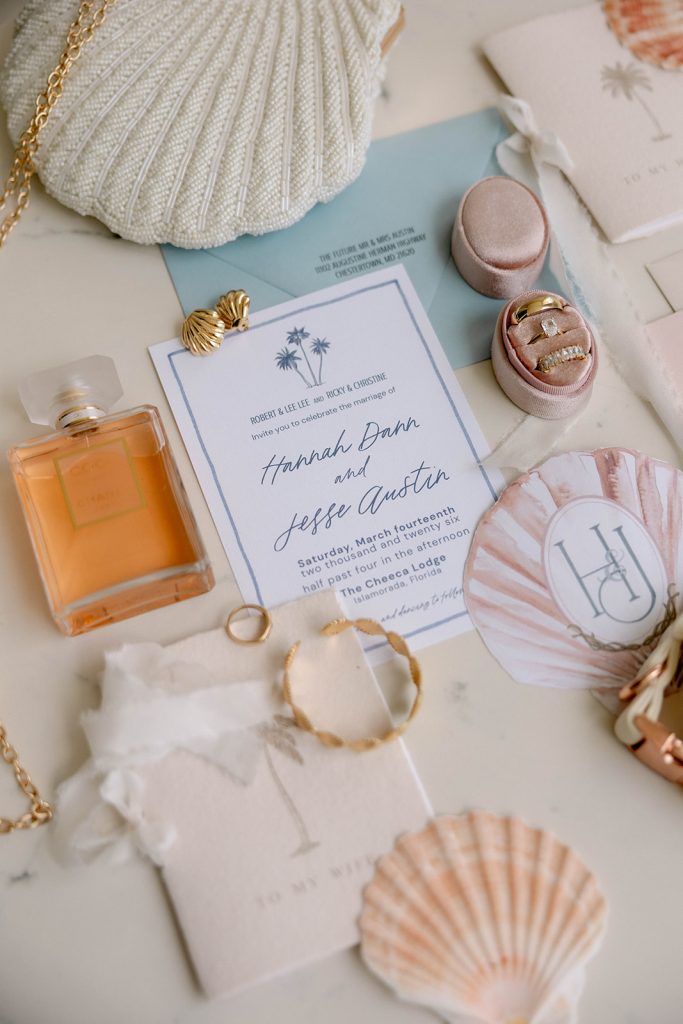
Your photographer may use it for styled detail photographs alongside rings, ribbon, florals, jewelry, perfume, heirlooms or other meaningful objects.

Photo // Rebecca Theresa Photography
It’s a small thing that’s very easy to forget once invitation assembly begins.
Quick Wedding Stationery Tips
- Start early. Custom artwork, revisions and specialty production take time.
- Don’t overcrowd the invitation. Accommodations, transportation and weekend details can live on an enclosure card or wedding website.
- Order a printed proof. Screen color isn’t a reliable substitute for seeing the actual piece.
- Think about signage early. Considering invitations and wedding-day pieces together makes it easier to establish a consistent design direction.
- Order a few extras. Save pristine suites for photography, keepsakes and the inevitable last-minute need.
Making It Personal
The details we remember most aren’t necessarily the most elaborate. They’re the ones that feel specific to the wedding.
A watercolor of the venue. A map showing guests around a favorite coastal town. Hand-painted oysters incorporated into an Eastern Shore seating display. A pattern hidden inside an invitation envelope that reappears months later on a statement bar.
These details give couples an opportunity to make their stationery about more than colors and typography. They can reference where they’re getting married, something meaningful to their relationship, or an idea that becomes part of the larger wedding design.
For us, that’s where wedding stationery gets really interesting: when something beautiful is also unmistakably personal.
Ready to Bring Your Stationery Ideas to Life?
If custom invitations and coordinated wedding-day details are part of your vision, working with a professional stationer can help turn those ideas into a cohesive design. Meet Lilly Lu Designs, a Delaware + Eastern Shore wedding stationery and signage studio creating custom pieces for celebrations throughout the region.
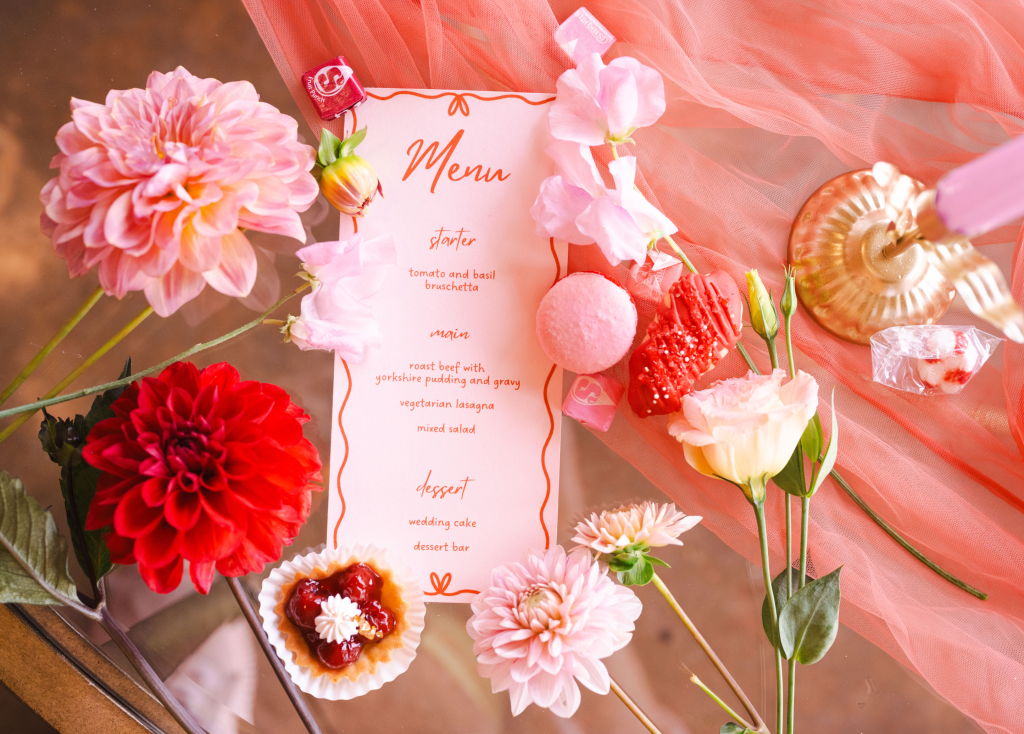
Lilly Lu Designs
Lilly Lu Designs creates custom wedding stationery and signage designed to carry a cohesive visual direction from the first invitation through the wedding day. Owner and designer Caralisa Carpenter works with couples on everything from invitation suites and custom illustrations to seating charts, welcome signs, menus and other day-of details, with careful attention to color, materials and print quality throughout the process.
Her work is a strong fit for couples who want stationery to feel personal to their wedding, whether that means incorporating the venue, a meaningful location, a custom motif or design details that connect the full celebration.
When you’re working with a designer, every piece is created to feel like it belongs together. If your save the date, invitation, menus, seating chart, and signage were all laid side by side, they should look like they were made by the same person, because they were.
Caralisa, Lilly Lu Designs